The Three-Number Test: When a Cost-Plus Pharmacy Membership Actually Pays for Itself

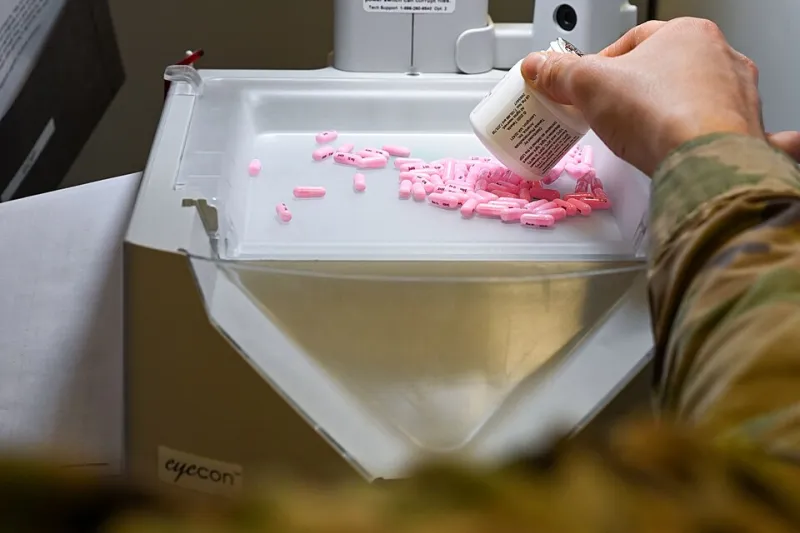
Photo: Rhoda Baer (Photographer), Public domain, via Wikimedia Commons
Cost-plus pharmacies have a clean pitch: you pay the wholesale ingredient cost plus a small markup or fee, and you skip the traditional pharmacy spread. For some prescriptions, that is a genuinely good deal. For others, the membership fee and per-order charges turn a $4 generic into a $15 habit.
The trick is that the pitch usually leads with the ingredient price. The receipt includes more. Before you move your prescriptions, run what I call the three-number test: membership, per-fill fees, and shipping. If those three numbers do not clear the savings on your actual medications, the membership is not saving you money — it is just a new bill.
The pitch versus the receipt
A cost-plus pharmacy might quote a common generic at $2 for a 30-day supply. Your corner drugstore might charge $10 cash. That looks like an $8 win. But the cost-plus order may also carry a $5 dispensing fee, $5 shipping, and a $99 annual membership. Suddenly that $2 prescription costs $12 at the register, and you still have to earn back the membership.
None of those fees are automatically bad. Some cost-plus pharmacies include shipping, waive the dispensing fee on larger orders, or charge a membership that covers the whole household. The point is to compare the total annual cost, not the ingredient price on the landing page.
Number one: the membership
Ask whether the membership is required, whether it covers everyone in your household, and whether it auto-renews. A $99 annual fee is $8.25 a month. That is easy to forget when you are comparing a $2 ingredient price to a $10 retail price.
If you fill only one cheap generic, the membership has to be earned back by that one drug. If you fill four chronic medications every month, the membership has more room to pay for itself. The math changes with volume, so do not compare a family plan to a single prescription.
Number two: the per-fill fees
Look for a dispensing fee, pharmacist review fee, or minimum order charge. These are usually charged per prescription or per order. A $5 fee on a $2 drug is a 250% surcharge. A $5 fee on an $80 drug is noise.
This is why cost-plus pharmacies tend to look great on expensive generics and less great on cheap ones. The fee is fixed; the ingredient savings scale with the drug price. If your medication is already in a $4 or $10 generic program at a local store, a per-fill fee can erase the advantage quickly.
Number three: shipping and handling
Shipping may be free over a certain order size, or it may be $5 to $10 per delivery. Cold-chain drugs, expedited shipping, and signature-required deliveries can cost more. If you need a medication quickly, a local pharmacy may be cheaper than paying for fast shipping — or you may not be able to wait at all.
Ask whether the pharmacy ships refills together, whether it charges per prescription or per box, and whether the shipping charge changes for refrigerated items. A “free shipping” banner often has a minimum cart size attached.
The break-even worksheet
Grab your three most expensive prescriptions and your three cheapest. For each one, write down:
- Your local pharmacy's cash price for a 30-day supply. Ask specifically for the cash price, not the insurance copay.
- The cost-plus ingredient price for the same drug, strength, form, and quantity.
- The cost-plus dispensing fee per fill.
- The shipping charge per order, divided by the number of prescriptions in that order.
- Any sales tax that applies.
Then use this simple formula:
Per-fill savings = local cash price − (cost-plus ingredient price + dispensing fee + shipping share)
If that number is zero or negative, the membership cannot save you money on that drug. If it is positive, multiply it by the number of fills you expect in a year. Then subtract the annual membership fee.
Annual savings = (per-fill savings × fills per year) − membership fee
To find the break-even point, divide the membership fee by the per-fill savings. That tells you how many fills it takes to earn back the membership. If you fill that prescription monthly and the break-even is two fills, you are probably fine. If the break-even is 14 fills and you refill quarterly, the membership is a loser.
Which prescriptions tend to win
Cost-plus pricing often has the most room to beat retail cash prices on higher-cost generics — the ones where a traditional pharmacy's cash price is $40, $80, or more. A fixed dispensing fee is easier to absorb when the ingredient savings are large. It can also be competitive on some brand drugs, though manufacturer programs and insurance copays can still beat it.
Cheap generics are the weak spot. If your drug is on a $4 list at a local store, a membership pharmacy needs a very low fee and very cheap shipping to beat it. The same goes for one-off prescriptions: if you need a short antibiotic course or a pain reliever after a procedure, paying a membership fee for one fill rarely makes sense.
Specialty drugs are their own category. Cost-plus may look attractive on the sticker price, but specialty medications often come with limited distribution, cold-chain shipping, and manufacturer support programs. Compare the total delivered cost, not just the ingredient price.
Transfer checklist so you don't pay two pharmacies
Switching is where people get burned. You transfer a prescription, the new pharmacy is waiting on the old one, and you fill at the local counter anyway. Now you have paid two pharmacies in the same month.
Use this checklist:
- Get the cost-plus quote in writing, including membership, dispensing fee, shipping, and tax.
- Confirm the pharmacy can transfer each specific prescription. Some controlled substances cannot be transferred, and some need a new prescription.
- Check your refill dates. Do not transfer a medication you just filled unless you are okay paying for an overlapping supply.
- Keep urgent and acute medications at a local pharmacy. A membership does not help if you need amoxicillin tonight.
- Ask whether the cost-plus pharmacy bills insurance or expects cash. If you are using insurance, confirm the copay before you transfer.
- Ask about auto-refill and cancellation. You do not want a membership that renews while you are still deciding.
- Do a 90-day trial with one or two stable maintenance drugs before moving everything.
The bottom line
Cost-plus pharmacies are not a scam, and they are not automatically cheaper. They are a math problem. If the membership, per-fill fees, and shipping are small compared with the ingredient savings on your actual medications, they can be a smart move. If you are filling cheap generics once in a while, the corner drugstore may still win.
Run the three-number test before you switch. The prescription price is the headline; the membership and fees are the fine print that decides whether you actually save.