The Score Line Is the Tell: A Smarter Way to Compare Tablet Strengths and Cash Prices

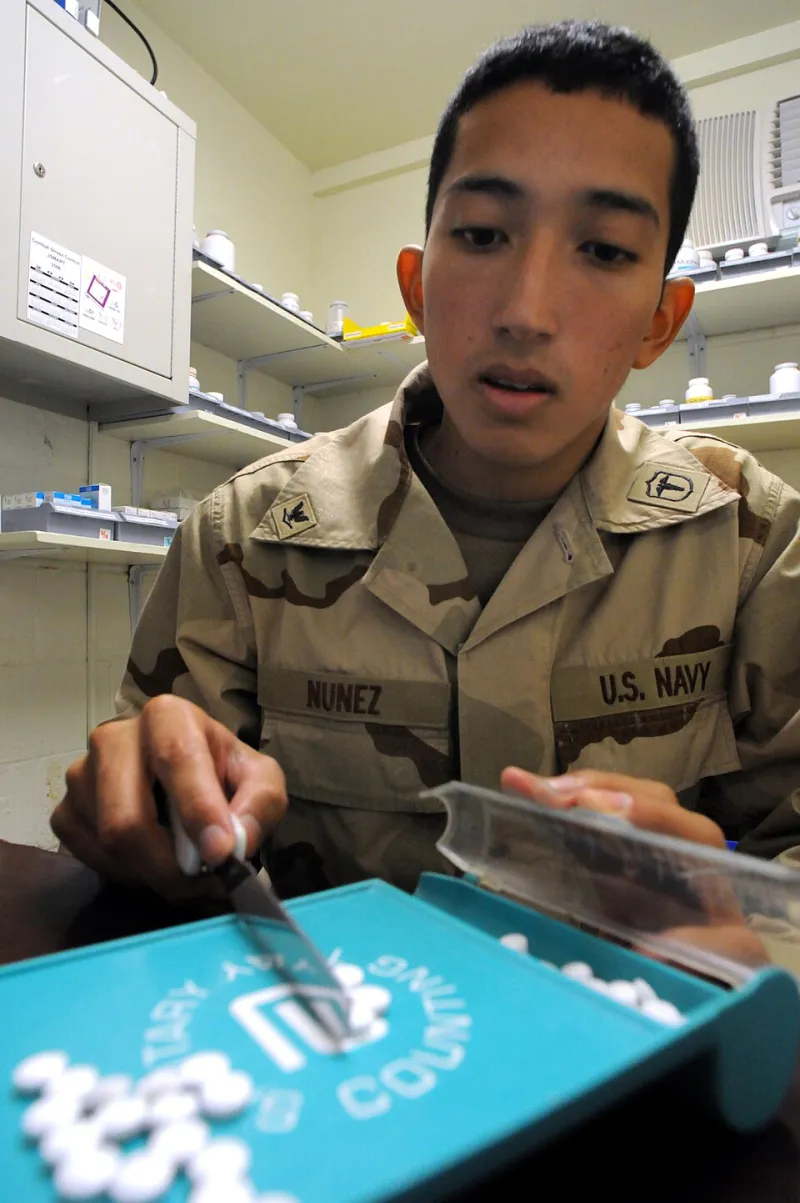
Photo: pill splitter cutting scored tablet on pharmacy counter, via www.fallinsideahole.com
At the pharmacy counter, the question sounds almost too simple: if a 500 mg tablet costs less than two 250 mg tablets, why not buy the bigger pill and split it? Sometimes that math works beautifully. Sometimes it is a waste of money, or worse, a dosing problem. The trick is to separate the price question from the safety question — and then get a pharmacist to sign off on both.
Run the math per dose, not per bottle
Start with the cash price for the exact quantity you would use. Suppose 30 tablets of 250 mg cost $15, or 50 cents per dose. The 500 mg version costs $18 for 30 tablets. If the tablet is scored and safe to split, that is 60 doses for $18, or 30 cents per dose. Same drug, same total milligrams, $12 less per month.
But if the 500 mg tablet is $30, the split dose is 50 cents — no savings at all. And if half the tablet crumbles, your real cost per dose rises fast. Use the per-dose number, not the per-milligram number alone, because a split that wastes powder is not a bargain. In 2026, cash prices swing widely between pharmacies, so price both strengths at the same counter on the same day.
The score line is not decoration
Not every tablet can be split. A scored, immediate-release tablet is designed to break along that line. An unscored tablet may crack unevenly. Extended-release tablets often release drug through a special matrix or coating; cutting them can dump the dose too fast. Capsules cannot be split at all. Enteric-coated tablets protect the stomach or the drug itself, and splitting defeats that.
Some narrow-therapeutic-index drugs — think seizure medications, blood thinners, thyroid products — should not be split without explicit instructions. This is not a DIY project. The score line is a clue, not a permission slip.
Where splitting quietly costs more
Even when the tablet is splittable, there are costs beyond the copay. A decent pill splitter costs $5 to $15. Some tablets shatter, so you lose doses. Halves can be hard to keep track of, especially for people with arthritis or vision issues. If a caregiver has to split pills, that is time. And if the split dose is uneven, you may get more drug one day and less the next. For medications with a narrow safety margin, that variability matters. A $10 monthly saving is not worth a hospital visit.
A pharmacist-checked framework
- Ask the prescriber whether the higher strength is appropriate for your condition and whether splitting is acceptable.
- Ask the pharmacist whether that specific tablet is scored, immediate-release, and stable when split.
- Get a new prescription for the higher strength — do not just double up on an old bottle.
- Price the higher strength as cash, through insurance, and through a discount card at the same pharmacy.
- Confirm the days supply and quantity so the math is apples to apples.
- If you split, use a splitter, store halves in a labeled container, and discard crumbs.
The order matters. Price comes after safety, not before it.
Scripts that get a straight answer
At the doctor's office: 'Would it be safe and appropriate to prescribe the 500 mg tablet and split it, or is this medication better kept as the 250 mg?'
At the pharmacy: 'Is this tablet scored and immediate-release? If my prescriber sends a new prescription for the higher strength, what is the cash price for 30 tablets?' And: 'Can you show me the per-dose cost both ways?'
A good pharmacist will answer without drama. If they hesitate, that is information. Ask them to explain the concern rather than pushing for a yes.
When the answer is no
Skip the splitter if the tablet is extended-release, enteric-coated, a capsule, or unscored. Skip it if you have trouble breaking pills evenly or remembering which half is which. Skip it if the drug has a narrow therapeutic index or comes with a warning against crushing or splitting. And skip it if the savings are tiny — a few dollars a month is not worth adding a weekly chore and a dosing risk.
Bottom line
Splitting can be a real money saver in 2026, but only for the right tablet, the right drug, and the right patient. Run the per-dose math, check the score line, and let your prescriber and pharmacist make the call. The goal is a lower bill, not a homemade dose.