The Number at the Register Isn't the Price: How to Ask for the Real Cash Cost of Your Prescription in 2026
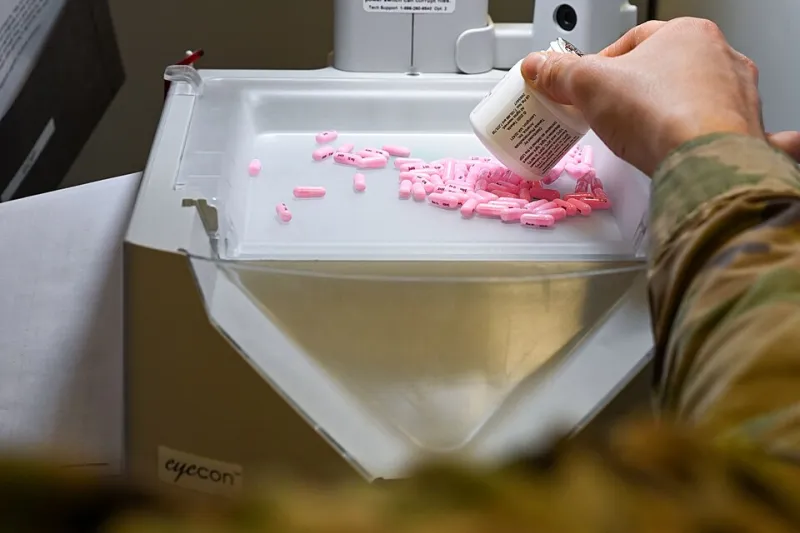
Photo: U.S. Air Force photo by Senior Airman Jessica Sanchez-Chen, Public domain, via Wikimedia Commons
There's a small ritual at every pharmacy counter in America. You slide the prescription across, the tech types for a minute, and then quotes a number. Maybe it's $11. Maybe it's $143. Either way, that number isn't necessarily the price — and it's often not the price you should pay.
The same generic tablets can carry four or five different prices depending on how the pharmacy rings up the sale: the retail sticker, your insurance's negotiated rate, a discount card someone handed you in a doctor's waiting room, and the pharmacy's own loyalty program. Learning to tell them apart is the single most useful money skill a patient can pick up in 2026.
Why one prescription has so many prices
The retail figure
This is the pharmacy's "usual and customary" price — the list price before anyone negotiates. Almost nobody actually pays it, but it's the number you'll see if the tech hasn't run anything yet.
Your insurance's contracted rate
When you use your plan, the pharmacy is bound by a contract with a pharmacy benefit manager. That rate can be lower than retail — or, in some notorious cases, noticeably higher than the cash price for the same generic. You generally can't ask the pharmacy to charge you less than the insurance rate while still billing the insurance. You can decline to use insurance.
Discount card prices
Cards like GoodRx, SingleCare, and RxSaver don't sell drugs. They sell access to a different negotiated rate, usually one that applies to cash purchases. Sometimes that's the best number in the room. Sometimes it's beaten by the store's own program.
Club and warehouse pricing
Membership warehouses and big-box pharmacies often have flat generic lists or aggressive self-pay rates. Most warehouse clubs let you use the pharmacy without a membership card, but it varies by state and store, so call first.
Manufacturer copay cards
These are genuinely valuable — for brand-name drugs, for people with commercial insurance. They cannot be used with Medicare or Medicaid, and they can't stack on top of a discount card.
The question that unlocks the real price
Vague questions get vague answers. Be specific, and ask for the sale to be priced without insurance:
"I'd like the cash price for this prescription — [drug name], [strength], [quantity] — without running my insurance. Is that the full amount including any dispensing fee?"
Then follow up with two more:
- "What would this cost if I used a discount card instead?"
- "And what would a 90-day fill cost?"
Asking for "the price" invites the retail sticker. Asking for the self-pay or cash price tells the tech exactly which calculation you want. If the answer is "hold on, let me check," that's a good sign — it means they're looking at more than one number.
Compare at least three places
Prices for identical generics routinely swing by 300% or more between a chain, a grocery store pharmacy, and an independent. Here's how to compare without wasting an afternoon:
- Write down the exact details. Drug name, strength in milligrams, dosage form, and quantity. "My blood pressure pill" can't be priced.
- Call three pharmacies, including one you'd normally skip — a warehouse club, a grocery chain, or a mail-order option.
- Ask the same question every time. Cash price, full fill, dispensing fee included.
- Note the date. Cash prices move, and a quote from six weeks ago isn't a promise.
When a lower sticker still loses
A smaller number on the receipt isn't automatically the better deal. Watch for these traps:
- Membership requirements. A $4 price that requires a $65 annual membership isn't $4 if you only fill two prescriptions a year. Do the math on the whole year.
- Subscription discount cards. Some card programs charge a monthly fee for their best rates. Free tier versus paid tier can be a big difference.
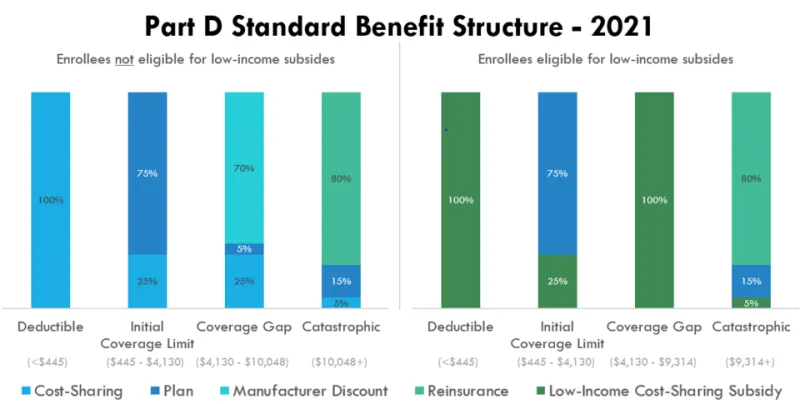
- The Medicare trade-off. If you have Part D, paying cash means the purchase doesn't count toward your deductible or your annual out-of-pocket cap, which is $2,100 for 2026. Skipping insurance to save $8 can cost you far more in December.
- Coupon stacking. Discount cards, manufacturer coupons, and insurance rarely combine. Pick the one that wins outright.
- Different quantities. A 30-day fill priced at $10 and a 90-day fill at $24 aren't the same deal — the second one is cheaper per pill by a wide margin. Compare unit costs, not totals.
- Partial fills. If the pharmacy is out of stock and offers to fill 12 tablets now, ask what the rest will cost when it arrives. Splitting a fill can trigger a second dispensing fee.
One habit worth keeping
Start a note on your phone — one line per prescription, with the drug, the quantity, the pharmacy, the price, and the date. Next time you refill, you'll know instantly whether the new quote is normal or inflated. Prices for cash-paying patients move constantly, and the only person tracking your particular prescription is you.
Asking for the real cash price isn't rude or awkward. It's a fair question about a purchase you're making, and the pharmacy staff answer it all day. The only thing unusual about it is how few people ask.