Medicare's Negotiated Drug Prices Are Live: What the First 10 Capped Medications Mean for Your 2026 Pharmacy Bill
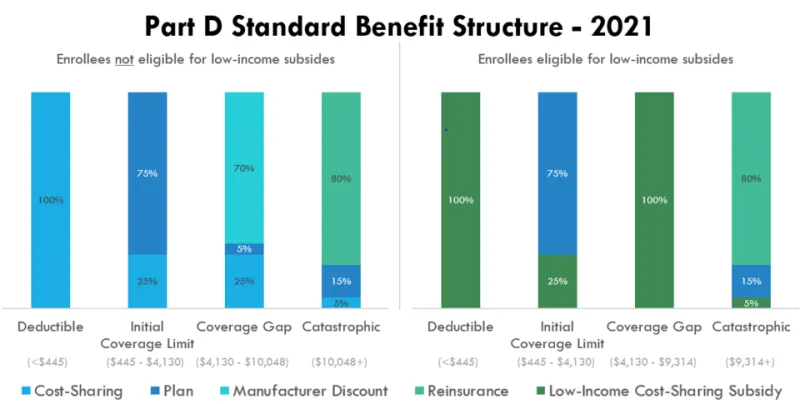
Photo: Burritosol, CC BY-SA 4.0, via Wikimedia Commons
If you take Eliquis, Jardiance, Xarelto, Januvia, Farxiga, Entresto, Enbrel, Imbruvica, Stelara, or NovoLog/Fiasp, this is not a policy story anymore. It is a pharmacy-counter story.
Since January 1, 2026, Medicare's first negotiated drug prices have been in effect. The change comes from the Inflation Reduction Act, which let Medicare negotiate prices for a limited set of high-spend drugs. The first 10 negotiated prices were announced in 2024 and are now part of the 2026 Part D landscape.
But here is the catch: a negotiated price is not the same as your copay. Whether you feel the savings depends on your plan, your formulary, your pharmacy, and how your cost-sharing is set up. So let's break down what changed, which conditions are affected, and how to check whether your plan is actually passing the savings through.
What actually changed in 2026
Medicare now has a maximum fair price for each of the first 10 drugs. That price is a ceiling for what Part D plans and pharmacies can be charged under the program, but it does not automatically translate into one flat patient copay. Your plan still sets tiers, deductibles, prior authorization rules, and pharmacy networks.
The CMS-listed maximum fair prices for a 30-day supply are a useful benchmark:
| Drug | Common use | CMS-listed 30-day maximum fair price |
|---|---|---|
| Eliquis (apixaban) | Blood thinner | $231 |
| Jardiance (empagliflozin) | Diabetes, heart failure | $197 |
| Xarelto (rivaroxaban) | Blood thinner | $197 |
| Januvia (sitagliptin) | Diabetes | $113 |
| Farxiga (dapagliflozin) | Diabetes, heart failure, kidney disease | $178.50 |
| Entresto (sacubitril/valsartan) | Heart failure | $295 |
| Enbrel (etanercept) | Arthritis, psoriasis | $2,355 |
| Imbruvica (ibrutinib) | Blood cancers | $9,319 |
| Stelara (ustekinumab) | Psoriasis, Crohn's disease, ulcerative colitis | $4,695 |
| NovoLog/Fiasp (insulin aspart) | Diabetes | $119 |
Those numbers are not your copay. They are the benchmark prices negotiated for the program. If your plan applies a 25% coinsurance, for example, your share is based on the plan's cost-sharing rules, not simply the maximum fair price. If your plan has a deductible, you may still pay more before coverage kicks in.
Who feels it at the counter
The first 10 drugs touch very common conditions: blood clots, diabetes, heart failure, rheumatoid arthritis, psoriasis, Crohn's disease, ulcerative colitis, blood cancers, and insulin-dependent diabetes. That means the savings could show up for a lot of Part D enrollees, but not in the same way for everyone.
Some patients may see a lower copay. Some may hit the Part D out-of-pocket cap faster or spend less before reaching it. The 2026 cap is $2,100, and the Medicare Prescription Payment Plan can spread out-of-pocket costs across the year. But a low premium plan can still have a high deductible or place a drug on a costly tier.
Also remember that Medicare Advantage prescription drug plans and stand-alone Part D plans can structure formularies differently. A drug that is cheap on one plan may be expensive on another. The negotiated price is a floor-level protection, not a guarantee that every plan will feel equally generous at the counter.
How to check whether your plan is passing savings through
Use this checklist before you commit to a plan for next year, or before you refill a prescription this year.
- Look up each drug by exact name and dose. Use Medicare Plan Finder or your plan's formulary tool. Check the tier, deductible, and cost-sharing for the pharmacy you actually use.
- Compare preferred and standard pharmacies. The same drug can have a different copay at a preferred pharmacy. A 90-day supply may also change the math.
- Ask the plan directly. Say: 'Is the 2026 maximum fair price for this drug reflected in my copay? What tier is it on? Does my deductible apply?' Write down the answer and the date.
- Ask the pharmacy to run both prices. Request the insurance price and the cash or discount-card price. If insurance is higher, ask whether the deductible or tier is the reason.
- Check restrictions. Prior authorization, step therapy, and quantity limits can block a cheap price from being usable. A low price on paper does not help if the plan will not cover the fill.
- Add up the full year. Compare premiums, deductible, copays, and pharmacy costs together. A $0 premium plan can still be the most expensive option for someone with regular prescriptions.
Red flags that a low premium can hide
Open enrollment for 2027 coverage closes on December 7, 2026. If you are shopping now, watch for these warning signs.
- A very low premium with a high deductible. The monthly savings can disappear in the first few fills.
- Your drug is on a high tier or not on the formulary. Check every maintenance medication, not just the one you expect to be expensive.
- The plan has a narrow preferred pharmacy network. The advertised copay may require a pharmacy that is not convenient for you.
- Prior authorization is required for a drug you already take. Confirm the plan will honor your current therapy or ask what your doctor will need to submit.
- The copay looks higher than the benchmark price. Ask the plan and pharmacy to explain how the price was calculated.
- The plan cannot answer basic questions. If the representative cannot confirm tier, deductible, or pharmacy rules, keep looking.
What to do if the savings are not showing up
Start with the pharmacy and ask for a detailed explanation of the claim. Then call your plan and ask whether the negotiated price is being applied. If you believe the plan is not following the rules, contact 1-800-MEDICARE or your State Health Insurance Assistance Program for free help. You can also ask about a formulary exception or appeal if a drug is restricted.
The first year of Medicare drug negotiation is a big change, but it is not a magic wand. The savings are real for many patients, and the benchmark prices are lower than list prices. Still, the smartest move is the same as always: check the plan, check the pharmacy, and check the total yearly cost before you enroll.