The Generic Exists. Your Pharmacy Bill Doesn't Know Yet.
Photo: Staff Sgt. Benjamin Stratton, Public domain, via Wikimedia Commons
Every few months a headline lands: a blockbuster drug just went generic. Patients read it, call the pharmacy, and get told the same thing — that'll be the brand price, or 'we don't have it yet,' or 'your plan doesn't cover that one.'
The confusing part is that nobody is lying. The generic really does exist. It just hasn't reached you yet, and there are several distinct stages between a patent expiring and a lower number on your receipt. Here is the 2026 version of that journey, stage by stage, so you can figure out where your prescription is stuck.
Stage 1: The launch window (days 1 to 30)
When exclusivity ends, one or two manufacturers typically launch a generic first — sometimes with a 180-day head start granted for being first to challenge the patent. During that window, competition is thin. Launch prices are often set at a modest discount to the brand, not the 80-90% discount people expect. The generic technically exists, and it may cost almost as much as the original.
What this means for you: a generic launch is not automatically a price event. If your pharmacist says the generic is available but your copay barely moved, that is usually why.
Stage 2: The pharmacy shelf (weeks 1 to 12)
Distribution is its own bottleneck. A pharmacy chain has to contract with the new manufacturer, get it into the wholesaler catalog, and decide which stores stock it. Independent pharmacies move faster here; large chains are more consistent but slower to add a new NDC across thousands of locations.
Practical move: call ahead and ask specifically whether they have the generic NDC in stock, not whether they 'have the drug.' Those are different questions with different answers.
Stage 3: The formulary update (the January reset)
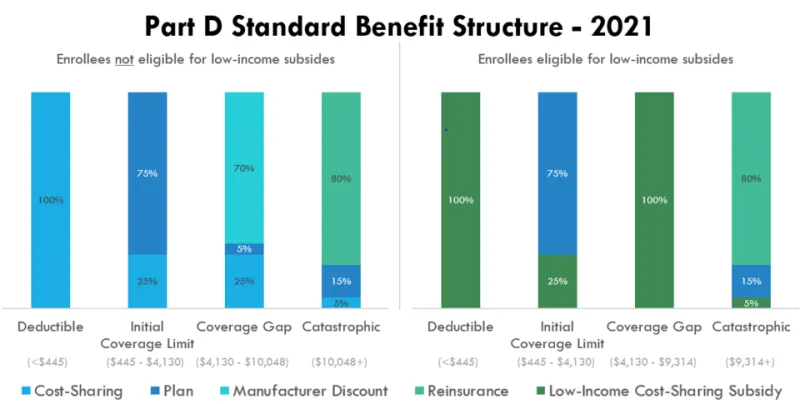
This is the stage that frustrates people most, especially anyone on a Part D plan. Formularies are typically rebuilt on a calendar-year cycle. A generic that launches in March may not get moved to a preferred tier, or added at all, until the next plan year. Until then, the plan can keep the brand on a preferred tier and put the new generic on a non-preferred tier — which means your copay can actually be higher for the generic than for the brand.
Yes, really. Always ask the pharmacist to price both. If the brand is cheaper under your plan, take the brand until the formulary catches up. There is no virtue in paying more for the same molecule.
Stage 4: Cash prices find the floor (3 to 12 months)
Cash prices behave differently from insurance prices. They respond to manufacturing volume. Once four, five, six manufacturers are shipping the same molecule, the cash price at discount chains and online cash programs collapses — often to a few dollars a month, sometimes less than the brand's copay tier for a Medicare patient.
This is where cash quietly beats insurance. A generic that is still sitting on a non-preferred tier with a $40 copay might cost $9 on a cash list. And because that drug's cash price is low, it will never meaningfully move your out-of-pocket maximum anyway — so the usual argument for using insurance does not apply.
Stage 5: Authorized generics and the lookalikes
One wrinkle worth knowing: some brand manufacturers launch an 'authorized generic' — the identical pill, same factory, different label, no brand marketing. It looks like a generic on your receipt and is priced like a brand. If your 'generic' price barely budged, check the manufacturer name on the bottle. You may be holding an authorized generic.
How to check whether the generic is really out there
A few concrete steps, in order:
- Search the FDA's Orange Book or the Drugs@FDA database for the active ingredient. It lists approved generics and the manufacturers behind them. If a generic is approved, you know it exists somewhere — the question becomes distribution.
- Ask the pharmacy for the NDC, the numeric product code. If they can read you an NDC that differs from your usual bottle, that is a real generic, not a promise.
- Price three ways in one sitting: your insurance copay for the brand, your insurance copay for the generic, and the cash price for the generic. Whichever is lowest wins — that is the whole game.
- Check a cash price comparison tool before you call, so you walk in with a number instead of a hope. If the pharmacy quotes something wildly higher, you have leverage.
- Ask about a different strength or form. Sometimes the generic for a 20 mg tablet lands months before the 10 mg, or the tablet lands before the capsule. A prescriber can often adjust.
When to bring your prescriber in
Loop in your prescriber if any of these are true:
- The brand is on a specialty tier and the generic is not yet covered at all
- You are on a fixed income and the current copay is not sustainable
- A therapeutic alternative in the same drug class is already generic and cheap
- Your plan requires step therapy or prior authorization on the new generic
Prescribers get these calls constantly, and most will happily switch to a cheaper equivalent in the same class if the clinical fit is reasonable. That conversation costs you nothing and can save hundreds.
What to say at the counter
Keep it short. Something like: 'I read that a generic launched. Can you check whether you have it in stock, and price it both under my plan and as cash?' Then: 'If the generic is more expensive than the brand under my plan, I would like the brand.'
That is it. Two sentences, and you have converted a confusing news story into an actual number on a register.
The takeaway
A generic drug existing and a generic drug being cheap at your pharmacy are separated by manufacturing scale, distribution, and a formulary cycle that only resets once a year. Expect a lag of three to twelve months on the insurance side, and much less on the cash side. When the headlines arrive, do not assume the savings have; go verify, ask for the NDC, and price it all three ways.