The Bottle Has a Fingerprint: How to Use the NDC to Catch a Generic Price Gap
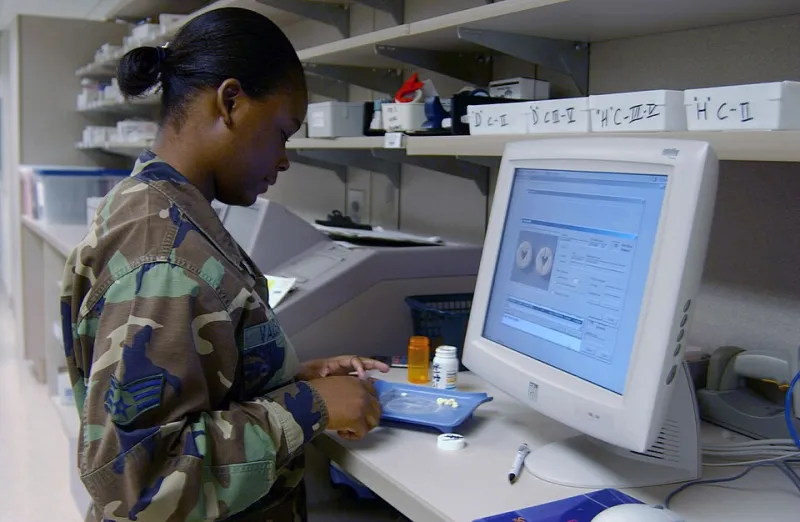
Photo: Department of Defense. American Forces Information Service. Defense Visual Information Center. 1994, Public domain, via Wikimedia Commons
You pick up a refill. Same drug, same strength, same count on the label. The cash price is $40 higher than the quote from the pharmacy across town. That is not always a billing glitch. In 2026, the quiet variable is often the National Drug Code, or NDC — the number that tells the supply chain exactly which version of the product is in the bottle.
The NDC Is the Bottle's Fingerprint
An NDC is the FDA's identifier for a human drug product. It is usually written as 10 digits in three chunks, and many pharmacy systems display an 11-digit version by adding a leading zero. The segments identify the labeler, the product, and the package. The labeler can be a manufacturer or a repackager. The package matters too: 30 tablets and 90 tablets are different NDCs. So are two companies making the same generic.
That is why the NDC deserves a place in your price check. It is not barcode trivia. It is the exact product identity behind the cash price.
Why the Same Generic Can Ring Up Differently
Pharmacies do not buy generic metformin in the abstract. They buy a specific package from a specific labeler through a wholesaler or contract. Cash prices can reflect acquisition cost, wholesaler deals, repackager markup, package size, and the pharmacy's own margin. One store might stock Labeler A at $18. Another stocks Labeler B at $58. Both can be legitimate generics. The NDC is different, and so is the price.
That is why a comparison based only on drug name and strength can miss the real cost. The drug may be the same. The supply chain is not.
Where the Quiet Substitution Shows Up
Supply shortages, wholesaler switches, and normal restocking can change the NDC between fills. The pharmacy may substitute another manufacturer's generic that is therapeutically equivalent. That can be legal and safe, but your cash price can move. If your $15 refill becomes $47 and the labeler changed, ask for the NDC and a reprice. Insurance plans also use NDCs for coverage rules, but cash shoppers need to watch it too.
A switched NDC is not automatically a bad thing. It is a signal to check the price and the package before you assume the old quote still applies.
Ask for the NDC Before You Pay
Call or ask at the counter: Can you tell me the NDC and package size you will dispense for a cash price on this prescription? Write down the drug, strength, form, quantity, NDC, and quoted price. If the pharmacy cannot quote until it fills, ask for a cash estimate and confirm the NDC at pickup. Compare the label to the quote before you tap your card. A quick check can catch a mismatched product or a stale price.
You do not need to memorize the number. You just need to make sure the number you are quoted is the number you are buying.
Compare the Whole Package, Not Just the Pill
Use the NDC with the drug name, strength, dosage form, quantity, and package. A 90-count bottle may have a lower per-unit price, but not always. Repackaged bottles can carry a different NDC and a different price. Ask whether the quote is cash, not insurance, and whether it includes any membership or coupon. At MedicinePrice24, the rule is simple: compare real prices for the exact product, not just the same drug name.
If one pharmacy is much cheaper, confirm the NDC and package size match before you switch. A lower price for a different package is not always a better deal.
A 60-Second Phone Script
Hi, I am paying cash for [drug, strength, form], quantity [number]. Can you tell me the NDC you will dispense and the cash price? Is that the same package size? Do you have another labeler or repackager with a lower cash price?
Repeat that with two or three pharmacies. Keep the answers side by side. The NDC turns a vague generic price comparison into an apples-to-apples check.
Red Flags Worth a Second Look
Watch for a refill price jump of more than a few dollars, a new labeler name, a repackaged-by line, a changed quantity, or a bottle that no longer matches the NDC on your quote. None of those automatically mean something is wrong. They do mean you should ask.
The NDC is not a quality score, and it is not a reason to skip your pharmacist's advice. It is a price and supply-chain identifier — a useful one when two bottles look identical but ring up $40 apart.
The Bottom Line
A generic drug can be the same medicine and still come from a different labeler, package, or repackager. That changes the NDC, and sometimes the cash price. Ask for the NDC before checkout, compare the full package, and check it again on refills. Real prices are easier to compare when you know exactly which bottle you are paying for.